Best power stations for Overlanding
194 products evaluated · Updated 2026

Best Power Stations for Overlanding

AGB Editorial Team

Quick verdict

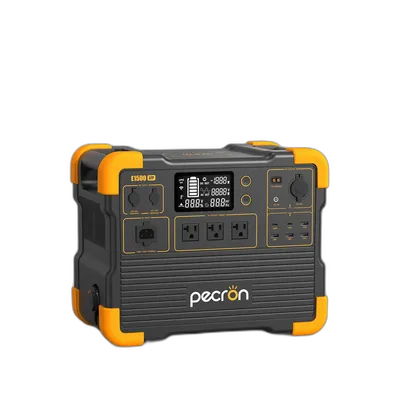
16 power stations tie at our top overlanding score of 100.0, so the best power station for overlanding really depends on your priority. If weight is your first constraint, the Pecron E1500LFP at 18 kg and $469 is the lightest and cheapest tie-group pick. If you want the most capacity for the dollar, the Pecron F3000LFP delivers 3072 Wh at $799 , that is the best $/Wh in the group. If max solar harvest matters, OUPES Mega 2 accepts 2100 W. The split is a choice, not a dead heat , pick by the trade-off that matches your rig.

We evaluated 194 portable power stations against the demands of overlanding — capacity, portability, recharge speed, and output — to surface the picks that actually fit the use case.

What makes a power station good for Overlanding

The thresholds we required to qualify a product for this list.
Weight: 65
weight
Mass in kilograms — affects how easily one person can lift and transport it.
Battery Capacity Wh: 1000
battery capacity wh
Total energy stored in watt-hours — how long the unit can power a given load between charges.
Max Solar Input: 400
max solar input
Highest solar wattage the charge controller accepts — sets the ceiling for daylight recharge speed.
Battery Lifespan Cycles: 2000
battery lifespan cycles
Number of full charge/discharge cycles before capacity drops to ~80% — how many years of regular use the battery survives.
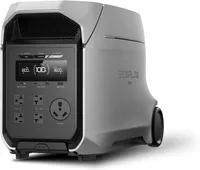
EcoFlow DELTA 3 Max Plus
#1 Overall pick

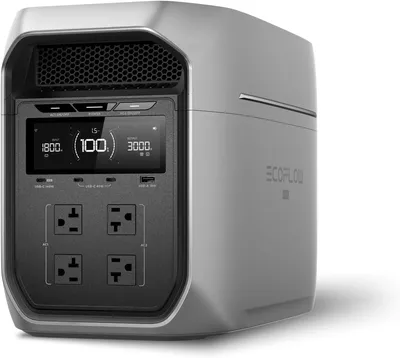
EcoFlow DELTA 3 Max Plus

Top activity score of 100 — 2,048 Wh, 3000 W AC output, 22.1 kg · 48.7 lbs.

100/100 activity score
A+ overall grade
$1,099 street price
Read full review

The Activity Score Leaderboard

Top 5 by activity score — full ranked list below.
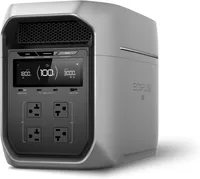
EcoFlow DELTA 3 Max Plus
EcoFlow DELTA 3 Max Plus100
EcoFlow DELTA 3 Ultra Plus
EcoFlow DELTA 3 Ultra Plus100
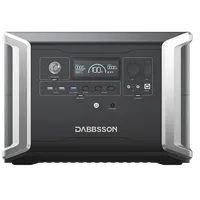
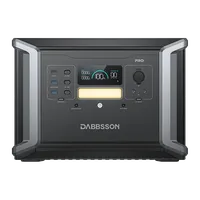
Dabbsson DBS2300 Plus
Dabbsson DBS2300 Plus100
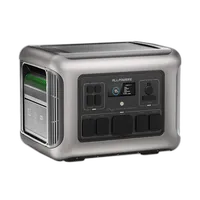
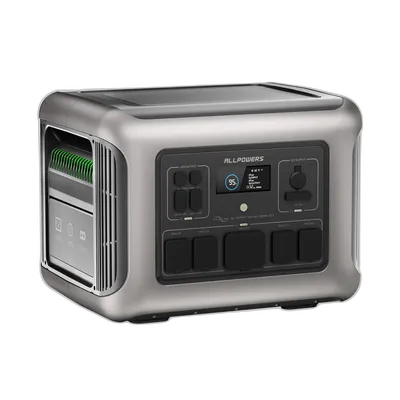
ALLPOWERS R2500
ALLPOWERS R2500100
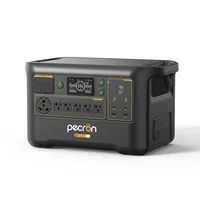
Pecron F3000LFP
Pecron F3000LFP100

Side-by-side Spec Comparison

All top-ranked picks compared across the metrics that matter most for overlanding.

ProductCapacity (Wh)Solar Input (W)DC / AndersonExpandableAGB Score
Pecron E1500LFP1,536800XT60 30A (12V), DC5525Yes100.0
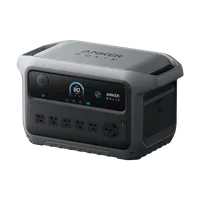
Anker SOLIX C2000 Gen 22,0488002x USB-C 140W, USB-C 15W, USB-AYes100.0
Pecron E2400LFP2,048800XT60 30A (12V), cigar 12V, DC5525Yes100.0
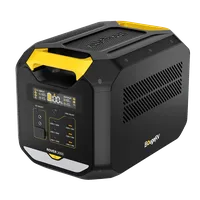
BougeRV ROVER20002,0081,50013.6V/10A 136W (cigarette)Yes100.0
OUPES Mega 22,0482,1002x DC 5521 (12V/10A), car lighterYes100.0
EcoFlow DELTA 3 Max Plus2,0481,000USB-A 18W, USB-C 140W + 2x45WYes100.0
EcoFlow Delta 2 Max2,0481,000car port 12.6V/10A, 2x DCYes100.0
Dabbsson DBS2100 Pro2,1501,200USB-A 3x, USB-C 3xYes100.0
Dabbsson DBS2300 Plus2,330800USB-A 3x, USB-C 3xYes100.0
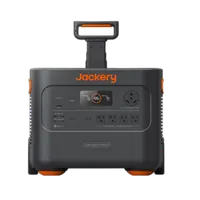
Jackery Explorer 2000 Plus2,0421,4002x USB-C 100W, 2x USB-A QC3.0Yes100.0
Bluetti AC200L2,0481,20012V/30A RV, 12V/10A cigYes100.0
Pecron F3000LFP3,0721,60012V/10A (car output)Yes100.0
ALLPOWERS R25002,0161,0002x DC5525 12V-10A 120W max; 2x USBYes100.0
Anker SOLIX F20002,0481,0003x USB-C 100W, 2x USB-A, car portYes100.0
Anker SOLIX F26002,5601,0003x USB-C 100W, 2x USB-A, car portYes100.0
EcoFlow DELTA 3 Ultra Plus3,0721,600USB-A 18W, USB-C 140W + 2x45WYes100.0

Detailed Field Rankings

#1EcoFlow DELTA 3 Max Plus
Best For Camping

EcoFlow DELTA 3 Max Plus

AGB Score
100.0
Price
$1099
Capacity
2048Wh
Weight
22.1 kg · 48.7 lbs

Top overall match for this use case based on activity-weighted scoring.
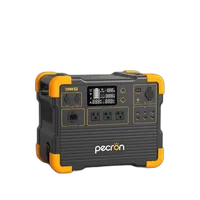
#1
EcoFlow DELTA 3 Ultra Plus
EcoFlow DELTA 3 Ultra PlusScore 100.0
$28993072Wh33.7 kg · 74.3 lbs
Compare
How we ranked these
We evaluate every power station against a structured 45-feature dataset across 10 categories. We do not field-test these products in real-world conditions; we score them on raw specifications and feature data. Our overlanding rubric weights seven criteria: weight (10), battery capacity (9), max solar input (8), battery lifespan cycles (7), AC continuous output (6), fast charging (5), and expandable capacity (3). Ideal targets are weight at or below 35 kg, capacity between 1500 and 3500 Wh, solar input between 800 and 2400 W, and at least 3000 charge cycles , most overlanding-suitable models use LiFePO4 (lithium iron phosphate) chemistry to hit that cycle life. Of 194 products we evaluate, 99 meet the baseline power floor (1000 Wh capacity, 12V DC output, 400 W solar input). 68 score 80 or higher on the full rubric. Only 8 carry the full Anderson + MPPT + 1000 Wh trifecta. A handful of mid-tier picks that miss the score-100 tie group still deserve a look: the Anker SOLIX C1000 is a strong mid-capacity option below the trifecta threshold, and Goal Zero remains a rugged-brand alternative for readers who prioritize chassis durability over the tight weight bar. This specification-first approach lets us evaluate every product on the same terms, without the sample-size limits of hands-on testing. It is also how the best power station for overlanding earns its rank: by carrying real weight on every rubric criterion, not by reviewer impression.

How much power do you actually need for overlanding?

A compressor fridge (50W), LED camp lights (50W), ham radio (50W transmit), laptop or tablet (60W), and a drone charger (80W) add up to roughly 340W peak load and 1200–1800Wh of daily draw depending on duty cycle. Use our calculator to plug in your specific device list and get a target Wh figure for your build.

Calculate your overlanding load

Frequently asked questions

What is the best portable power station for overlanding?
The best power station for overlanding is one of the 16 products tied at our top score of 100.0, and which one wins depends on your priority. For weight-conscious solo carry, the Pecron E1500LFP at 18 kg is the lightest pick and also the cheapest at $469. For maximum capacity per dollar, the Pecron F3000LFP delivers 3072 Wh at $799 ($0.26/Wh). For the fastest solar recharge, the OUPES Mega 2 accepts 2100 W of solar input. All three hit the same overlanding score on our 7-criterion rubric , pick by the trade-off that matches your rig.
How much power do I need for overlanding?
Plan for 1200–1800Wh per day for a typical overland camp setup. A compressor fridge draws about 50W continuous (roughly 600Wh over 12 hours). Add LED camp lights at 50W, a ham radio at 50W during transmit, a laptop or tablet at 60W, and a drone charger at 80W. That totals about 340W peak load. Running those devices across a full day with realistic duty cycles puts you at 1200–1800Wh daily. Add 20–30% for inverter losses and you need 1500–2300Wh minimum without solar. With 400–600W of panels in 6–8 sun-hours, a 2000Wh unit sustains indefinitely. When you compare those daily draw numbers against the 16 tie-group leaders, the best power station for overlanding for your trip is the one whose Wh rating covers your expected off-grid stretch with a 20-30% margin.
Can a portable power station run a 12V fridge?
Yes. Any unit with a regulated 12V DC output at 10A or more can run a 12V compressor fridge without using the AC inverter. The Dabbsson DBS2300 Plus (2330Wh) runs a 50W fridge for roughly 40 hours in DC mode after efficiency losses. The Pecron E1500LFP (1536Wh, DC5525 output) handles a lighter fridge load for 20–25 hours. Using DC output instead of AC saves 10–15% in runtime because you skip inverter conversion losses.
How do you charge a power station while overlanding?
Three methods work in the field. Solar is the primary option: the 16 top-scoring picks accept 800W to 2100W of solar input via MPPT controllers, which harvest 20–30% more power than PWM at the same panel wattage. Alternator or car charging connects to your vehicle's 12V system; it is slow (typically 200–400W) and risks draining your starter battery without a DC-DC isolator. Only 8 of 194 power stations in our dataset carry an Anderson port for direct DC-DC charging, and none of those 8 appear in the top-scoring tier. AC wall pre-charge before departure fills the unit fastest and is the most reliable option where grid power is available.
How much solar do I need for overlanding?
For a 340W peak load, you need roughly 500–600W of panels to recharge a 2000Wh unit in 6–8 daily sun-hours after angle and shading losses. An MPPT controller (required by all 16 top picks) recovers 20–30% more than PWM at the same panel wattage. Size panels to the station's solar input ceiling: the OUPES Mega 2 accepts 2100W (the top in the tie-group), the EcoFlow DELTA 3 Ultra Plus and Pecron F3000LFP accept 1600W, and the BougeRV ROVER2000 accepts 1500W. Adding panels beyond that ceiling delivers no gain. When you size a solar setup for an overland rig, work backward from your daily Wh draw, and treat panel wattage as a ceiling that caps how fast the best power station for overlanding can recharge between days.
Is a power bank better than a solar panel for overlanding?
They are not competing options. A power station stores energy; a solar panel generates it. For multi-day overlanding you need both working together: the power station holds your capacity buffer through the night, and the panels refill it during the day. A USB power bank (small pocket device) has no role in this setup. Start with the power station sized to your daily load, then add panels sized to the station's solar input ceiling.
Is Jackery or EcoFlow better for overlanding?
Both brands tie at 100.0 in our overlanding rankings, so neither is objectively better. The Jackery Explorer 2000 Plus carries 2042Wh, accepts 1400W solar, weighs 27.9 kg, and costs $1,099 with 4000 rated cycles. The EcoFlow DELTA 3 Max Plus carries 2048Wh, accepts 1000W solar, weighs 22.1 kg, and costs $1,099 with 4000 rated cycles. EcoFlow wins on weight (22.1 kg vs 27.9 kg); Jackery wins on solar input (1400W vs 1000W). For max capacity from either brand, the EcoFlow DELTA 3 Ultra Plus adds 3072Wh at 33.7 kg for $2,899.
What is the difference between a power station and a dual battery system?
A dual battery system is a fixed 12V lithium or AGM battery wired permanently into your vehicle, charged by the alternator through a DC-DC isolator. A portable power station is a self-contained unit with a built-in AC inverter, MPPT charge controller, and battery management system you can move between vehicles or use off the vehicle entirely. Dual battery systems give deeper vehicle integration, particularly for alternator charging; only 8 of 194 power stations carry an Anderson port for that kind of direct DC-DC hookup, and they sit outside the top-scoring tier. Power stations give clean 110V AC for laptops and CPAP machines, require no installation, and can run devices far from the vehicle. Many overlanders run both: a dual battery for the fridge and compressor, a power station for the camp electronics. For most readers, the best power station for overlanding sits in that portable bucket: it slides between vehicles, runs cleaner AC for laptops or a CPAP, and avoids the wiring complexity of an integrated dual-battery install.

Best Value by Budget

The highest activity score we found at each price ceiling.
Other use cases

Best picks for related power station scenarios.